
Peracetic Acid for Endoscope and Instrument Sterilization
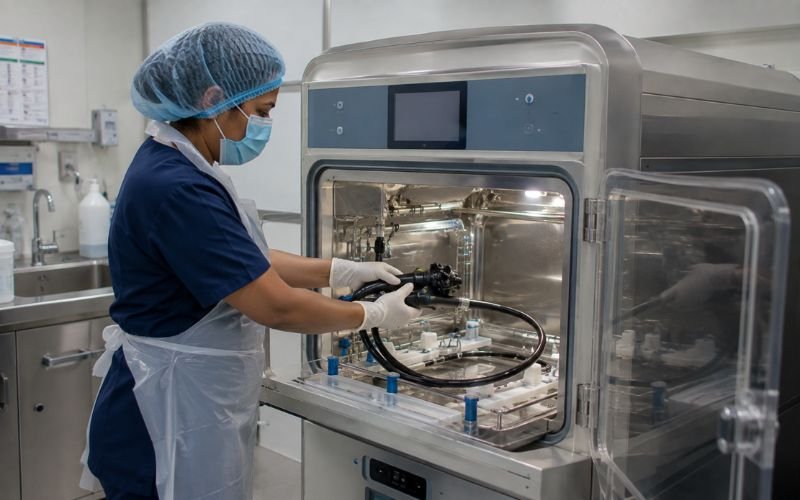
Peracetic acid does something most high-level disinfectants cannot: it achieves true sterilization, eliminating bacterial endospores, at low temperature, without the long processing times ethylene oxide requires. It has been used in automated liquid chemical sterilization systems for flexible endoscopes since the technology was introduced in 1988, and it remains one of the two most common methods for reprocessing endoscopes in hospitals today, alongside glutaraldehyde.
Clinivance Healthcare Solutions supplies peracetic acid to hospitals, endoscopy units and distributors across Africa and the Middle East. As a sterilizing and dependable supplier, we provide concentrated peracetic acid for automated systems and ready-to-use diluted solutions, with material compatibility guidance included.
Our Range of Peracetic Acid Products
This category covers peracetic acid products used across sterilization and disinfection applications:
- Concentrated peracetic acid (approximately 35 percent) for automated liquid chemical sterilization systems
- Diluted, ready-to-use peracetic acid working solution (approximately 0.2 percent) for manual reprocessing
- Peracetic acid combined with hydrogen peroxide, used as an FDA-recognized high-level disinfectant and sterilant
- Single-dose sterilant containers designed for automated endoscope reprocessors
Concentrated peracetic acid is typically diluted with filtered water at around 50 degrees Celsius before use in automated systems, circulating through the instrument channels for roughly 12 minutes to decontaminate exterior surfaces, lumens and accessories.
Why Peracetic Acid Achieves True Sterilization, Not Just Disinfection
Most high-level disinfectants leave some bacterial endospores behind. Peracetic acid, used correctly in an automated system, reliably eliminates them, which is why it is classified as a sterilant rather than just a high-level disinfectant. It also stays effective in the presence of organic soil, protein residue that reduces the effectiveness of some other chemistries, which matters when reprocessing complex instruments with narrow lumens that are hard to fully clean beforehand. Peracetic acid is corrosive to some materials, which is why it is typically supplied with an anticorrosive agent and why checking material compatibility with your specific instruments matters before switching chemistries.
Why Hospitals and Endoscopy Units Choose Clinivance
Switching an endoscopy unit to peracetic acid without confirming material compatibility with your specific instrument models is a real risk, corrosion damage to expensive endoscopes is not a mistake anyone wants to make twice. We ask about your equipment and instrument models before recommending a peracetic acid product, rather than assuming compatibility.
The CDC guideline on peracetic acid sterilization documents the automated low-temperature sterilization process peracetic acid supports, which remains one of the standard methods for reprocessing complex, heat-sensitive endoscopes in hospitals today.
Buyers also work with us for:
- Material compatibility guidance for your specific instruments before you switch chemistries
- Order volumes suited to hospitals, endoscopy units and government tenders
- Export documentation prepared ahead of shipment arrival
- Fast WhatsApp and email response for urgent or repeat stock needs
Peracetic Acid Supply in Nigeria, Kenya, South Africa and the GCC
Nigeria and Kenya’s growing endoscopy units are increasingly adopting automated peracetic acid sterilization systems as gastrointestinal procedure volumes rise. South Africa’s established private hospital endoscopy departments regularly specify peracetic acid as an alternative to glutaraldehyde for staff safety reasons. Across the GCC, private hospitals investing in advanced endoscopy services often specify peracetic acid sterilization as part of their reprocessing standard.
We also see steady interest from Uganda, Ghana, Tanzania and Egypt, along with growing enquiries from distributors in parts of Asia. As with other pages in this category, this country list is a reasoned estimate rather than verified trade data specific to this product.

Export Markets We Serve
Clinivance exports peracetic acid to hospitals, endoscopy units and distributors across Africa and the Middle East, including Nigeria, Kenya, South Africa, the GCC region, Uganda, Ghana, Tanzania and Egypt. Our full Disinfectants & Solutions range, including Hydrogen Peroxide, Glutaraldehyde and Aldehydes, is also available for buyers looking to consolidate orders.
Bulk order enquiry - Peracetic Acid
Share your requirements and receive a quote
Frequently Asked Questions
What is the difference between concentrated and diluted peracetic acid?
Concentrated peracetic acid, around 35 percent, is used in automated sterilization systems and diluted at the point of use, typically to around 0.2 percent working concentration. Diluted, ready-to-use solutions are supplied for manual reprocessing applications.
Is peracetic acid a sterilant or a high-level disinfectant?
Used correctly in an automated system, peracetic acid is classified as a sterilant because it reliably eliminates bacterial endospores, not just vegetative organisms, which puts it a step above high-level disinfection.
Does peracetic acid still work if instruments are not perfectly clean beforehand?
Peracetic acid remains effective in the presence of organic soil better than some other chemistries, though proper pre-cleaning is still required for reliable reprocessing outcomes.
Is peracetic acid corrosive to endoscopes and instruments?
Peracetic acid can be corrosive to certain materials, which is why it is typically supplied with an anticorrosive agent. We recommend confirming material compatibility with your specific instrument models before switching chemistries.
How long does an automated peracetic acid sterilization cycle take?
A typical automated cycle circulates diluted peracetic acid through the instrument for around 12 minutes at approximately 50 degrees Celsius, though exact cycle times depend on your specific reprocessing system.
What documentation is provided with peracetic acid exports?
We provide manufacturing certificates, safety data sheets, concentration documentation, Certificate of Analysis, and Free Sale Certificates to support customs clearance and local registration.
Which countries do you currently supply peracetic acid to?
We regularly export to Nigeria, Kenya, South Africa, the GCC region, Uganda, Ghana, Tanzania and Egypt, with growing interest from parts of Asia.
Prefer to reach us directly?
enquiries@clinivanceglobal.com
Send us your product requirements
Within 24 hours
Monday – Saturday, 9AM – 6PM IST