
Aldehyde Disinfectants for High-Level Disinfection and Sterilization
Aldehydes are among the strongest disinfectant chemistries used in healthcare, sporicidal, meaning they kill bacterial spores that many other disinfectants cannot touch. The aldehyde family includes formaldehyde, glutaraldehyde, glyoxal and orthophthaldehyde (OPA). This page focuses on formaldehyde specifically, since glutaraldehyde and OPA each have their own dedicated product page with detailed specifications.
Clinivance Healthcare Solutions supplies formaldehyde-based disinfectant solutions to hospitals, clinics, laboratories and distributors across Africa and the Middle East. As a sporicidal and dependable supplier, we provide formaldehyde solutions with the safety documentation and handling guidance this chemistry genuinely requires.
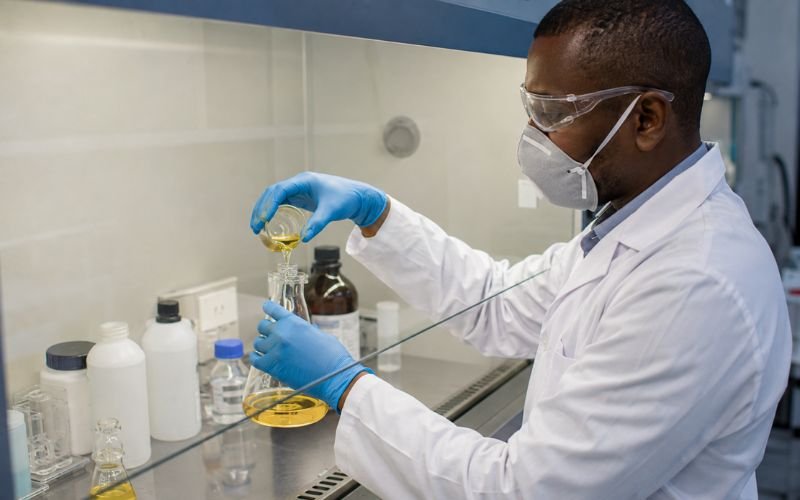
Our Range of Formaldehyde-Based Disinfectants
This page covers formaldehyde-based disinfection products:
- Formalin solution, a water-based solution containing approximately 37 percent formaldehyde by weight
- Formaldehyde combined with potassium permanganate for fumigation applications
- Formaldehyde and hydrogen peroxide combination products for surface disinfection
For glutaraldehyde or orthophthaldehyde (OPA) high-level disinfectants, see our dedicated Glutaraldehyde and Orthophthaldehyde product pages, which carry their own detailed specifications and safety documentation.
Why Formaldehyde Use Has Declined in Many Healthcare Settings
Formaldehyde is an effective bactericide, virucide, fungicide and sporicide, and it remains in use for fumigation and specific surface disinfection applications. Its use has declined in many hospital settings over recent decades due to its classification as a carcinogen, which requires careful ventilation, exposure monitoring and handling protocols. This is exactly why glutaraldehyde was introduced decades ago as a safer high-level disinfection alternative, and why OPA has more recently gained ground over glutaraldehyde itself for similar occupational health reasons. We supply formaldehyde only where it genuinely remains the right tool for the job, alongside full safety documentation for handling.
Why Hospitals and Laboratories Choose Clinivance
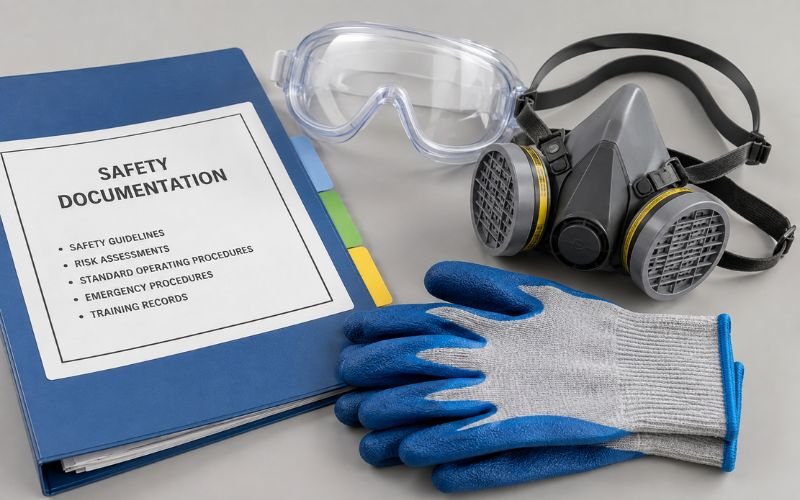
Formaldehyde is not a chemistry to source casually. We provide complete safety data sheets, exposure guidance and handling documentation with every shipment, and we are upfront when a buyer’s actual use case would be better served by glutaraldehyde or OPA instead, rather than selling formaldehyde by default because it happens to be in stock.
The CDC guidance on chemical disinfectants documents formaldehyde’s disinfection profile alongside its safety considerations, which is exactly the balance we aim to give buyers rather than presenting only the disinfection strength without the handling context.
Buyers also work with us for:
- Honest guidance on formaldehyde versus glutaraldehyde or OPA for your actual use case
- Complete safety documentation and handling guidance with every shipment
- Order volumes suited to hospitals, laboratories and government tenders
- Export documentation prepared ahead of shipment arrival
Aldehyde Disinfectant Supply in Nigeria, Kenya, South Africa and the GCC
Nigeria and Kenya’s public health facilities and laboratories maintain occasional demand for formaldehyde in fumigation and specimen preservation applications. South Africa’s laboratory and research sector uses formaldehyde for specific fixation and disinfection purposes where alternatives are not suitable. Across the GCC, formaldehyde use is generally limited to specialized laboratory and industrial applications rather than routine hospital disinfection.
We also see occasional interest from Uganda, Ghana, Tanzania and Egypt for specific laboratory applications. As with other pages in this category, this country list is a reasoned estimate rather than verified trade data specific to this product.
Export Markets We Serve
Clinivance exports formaldehyde-based disinfectants to hospitals, laboratories and distributors across Africa and the Middle East, including Nigeria, Kenya, South Africa, the GCC region, Uganda, Ghana, Tanzania and Egypt. Our full Disinfectants & Solutions range, including Glutaraldehyde, Orthophthaldehyde and Chemical Disinfectants, is also available for buyers looking to consolidate orders.
Bulk order enquiry - Aldehydes
Share your requirements and receive a quote
Frequently Asked Questions
What is the difference between formaldehyde and glutaraldehyde?
Formaldehyde is a monoaldehyde that works more slowly and carries carcinogen classification requiring careful handling. Glutaraldehyde is a dialdehyde introduced partly as a safer, faster-acting high-level disinfectant alternative, and is covered on its own dedicated product page.
Why has formaldehyde use declined in hospitals?
Formaldehyde’s classification as a carcinogen requires strict ventilation and exposure controls, which led many hospitals to shift toward glutaraldehyde and later OPA for high-level disinfection, reserving formaldehyde mainly for fumigation and specific laboratory applications.
What is formalin used for?
Formalin, an approximately 37 percent formaldehyde solution, is used for fumigation, surface disinfection, and specimen preservation in laboratory settings.
Is formaldehyde sporicidal?
Yes, formaldehyde is effective against bacteria, viruses, fungi and bacterial spores, though it generally works more slowly than glutaraldehyde for equivalent disinfection outcomes.
Should we use formaldehyde or ask about an alternative for our high-level disinfection needs?
For most routine high-level disinfection of medical instruments, glutaraldehyde or OPA are generally the better choice today. We can advise which chemistry fits your specific application rather than defaulting to formaldehyde.
What documentation is provided with formaldehyde exports?
We provide safety data sheets, handling and exposure guidance, manufacturing certificates, Certificate of Analysis, and Free Sale Certificates to support customs clearance and local registration.
Which countries do you currently supply formaldehyde-based disinfectants to?
We regularly export to Nigeria, Kenya, South Africa, the GCC region, Uganda, Ghana, Tanzania and Egypt, with occasional interest from other markets for specific laboratory applications.
Prefer to reach us directly?
enquiries@clinivanceglobal.com
Send us your product requirements
Within 24 hours
Monday – Saturday, 9AM – 6PM IST