
Chemical Disinfectants for Hospitals, Clinics and Laboratories
Not every surface or instrument in a hospital needs the same level of disinfection. A stethoscope that only touches intact skin needs a low-level disinfectant. An endoscope that touches mucous membranes needs high-level disinfection or sterilization. Choosing the wrong disinfectant for the wrong item is either a wasted cost or a real infection control gap, and the framework hospitals and infection control teams use to make that decision is called the Spaulding Classification.
Clinivance Healthcare Solutions supplies chemical disinfectants to hospitals, clinics, laboratories and distributors across Africa and the Middle East. As a certified and dependable supplier, we cover the full range of disinfectant chemistries used across healthcare settings, and every product comes with clear documentation on its disinfection level and registered use.
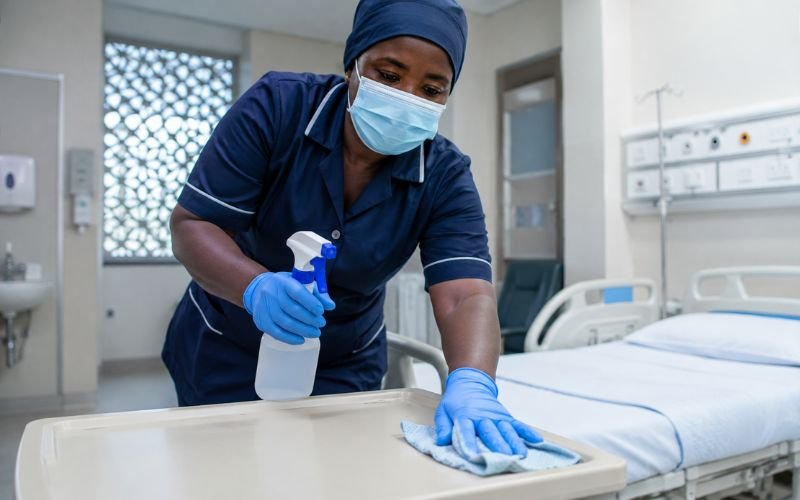
Our Range of Chemical Disinfectants
This category covers all the major disinfectant chemistries used in healthcare settings, each available as its own product line:
- Hydrogen Peroxide, a high-level disinfectant and sporicidal option for surface and equipment disinfection
- Peracetic Acid, commonly used for high-level disinfection and sterilization of medical instruments
- Alcohols, intermediate-level disinfectants for skin antisepsis and surface disinfection
- Iodophors, intermediate-level disinfectants used for skin preparation and general surface use
- Phenolics, general-purpose disinfectants for environmental surface cleaning
- Aldehydes, used for high-level disinfection of heat-sensitive instruments
- Orthophthaldehyde (OPA), a high-level disinfectant increasingly used as an alternative to glutaraldehyde
- Chlorine and Chlorine Compounds, used across a wide range of disinfection levels depending on concentration
- Glutaraldehyde, a long-established high-level disinfectant and chemical sterilant
Each of these chemistries has its own dedicated page on our site with specific product details, concentrations and documentation.
Understanding Disinfection Levels
The Spaulding Classification divides medical items into three categories based on infection risk. Critical items enter sterile tissue or the vascular system and must be sterilized. Semi-critical items contact mucous membranes or non-intact skin and require high-level disinfection at minimum. Non-critical items only contact intact skin and can be managed with low-level disinfection. Low-level disinfectants handle most vegetative bacteria and some viruses within about 10 minutes. Intermediate-level disinfectants also handle mycobacteria and most viruses. High-level disinfectants eliminate all microorganisms except high numbers of bacterial spores, and are regulated more closely by health authorities given their strength.
Why Hospitals and Clinics Choose Clinivance
Buying a disinfectant is not just picking a chemical name off a list, it means matching the right disinfection level to what the product will actually be used on. We help buyers think through that match before quoting, and every product we supply comes with documentation on its registered disinfection level and appropriate use, not just a generic safety data sheet.
The CDC Guideline for Disinfection and Sterilization in Healthcare Facilities sets out the Spaulding Classification and disinfection level framework that guides safe chemical disinfectant selection in health care settings worldwide, and it is the same framework we use to help buyers select the right product for their needs.
Buyers also work with us for:
- Guidance on matching disinfection level to actual use case
- Order volumes suited to hospitals, clinics, laboratories and government tenders
- Export documentation prepared ahead of shipment arrival
- Fast WhatsApp and email response for urgent or repeat stock needs
Chemical Disinfectant Supply in Nigeria, Kenya, South Africa and the GCC
Nigeria and Kenya’s hospital and public health facility networks maintain steady demand for general surface and skin disinfectants across daily infection control routines. South Africa’s established private hospital sector regularly specifies high-level disinfectants for endoscopy and instrument reprocessing units. Across the GCC, private hospitals and clinics increasingly require documented disinfection level compliance as part of accreditation standards.
We also see steady interest from Uganda, Ghana, Tanzania and Egypt as infection control standards continue to develop, along with growing enquiries from distributors in parts of Asia sourcing disinfectants outside their usual regional suppliers. As with other recent pages, this country list is a reasoned estimate based on general infection control infrastructure investment, not verified trade-volume data specific to this product category.
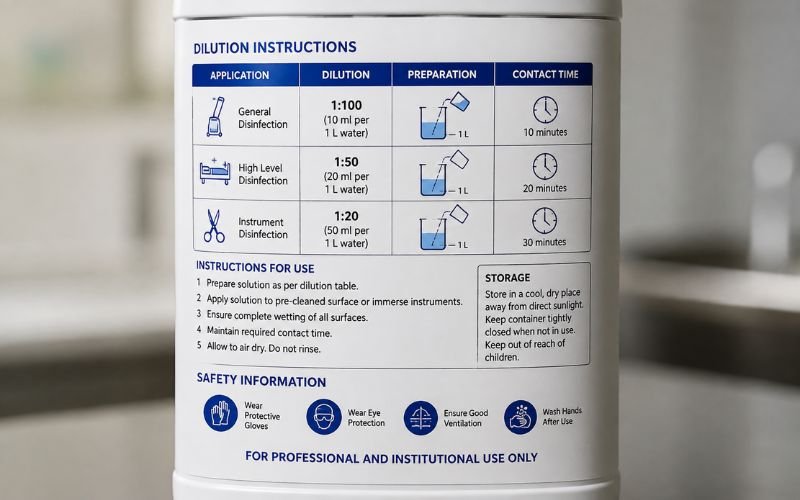
Export Markets We Serve
Clinivance exports chemical disinfectants to hospitals, clinics, laboratories and distributors across Africa and the Middle East, including Nigeria, Kenya, South Africa, the GCC region, Uganda, Ghana, Tanzania and Egypt. Our full Disinfectants & Solutions range, covering each specific chemistry from Hydrogen Peroxide to Glutaraldehyde, is also available for buyers looking to consolidate orders.
Bulk order enquiry - Chemical Disinfectants
Share your requirements and receive a quote
Frequently Asked Questions
What is the Spaulding Classification?
It is a framework that divides medical items into critical, semi-critical and non-critical categories based on infection risk, which determines whether an item needs sterilization, high-level disinfection, or low-level disinfection.
What is the difference between low, intermediate and high-level disinfectants?
Low-level disinfectants handle most vegetative bacteria and some viruses in about 10 minutes, suited to non-critical items. Intermediate-level disinfectants also handle mycobacteria and most viruses. High-level disinfectants eliminate all microorganisms except high numbers of bacterial spores, used for semi-critical items and closely regulated given their strength.
Which disinfectant should we use for endoscopes and other semi-critical instruments?
Semi-critical instruments require high-level disinfection at minimum, commonly achieved with glutaraldehyde, OPA, peracetic acid or hydrogen peroxide based products, depending on your reprocessing equipment and instrument compatibility.
Do you supply disinfectants for general surface cleaning as well as instrument reprocessing?
Yes, our range covers both, general surface disinfectants like phenolics and quaternary compounds for environmental cleaning, and high-level disinfectants for instrument reprocessing.
What documentation is provided with disinfectant exports?
We provide manufacturing certificates, safety data sheets, disinfection level classification, Certificate of Analysis, and Free Sale Certificates to support customs clearance and local registration.
Which countries do you currently supply chemical disinfectants to?
We regularly export to Nigeria, Kenya, South Africa, the GCC region, Uganda, Ghana, Tanzania and Egypt, with growing interest from parts of Asia.
Can we order different disinfectant chemistries together in one shipment?
Yes, most hospital and distributor orders combine several disinfectant chemistries, for example a high-level instrument disinfectant alongside general surface disinfectants, into a single consolidated shipment.
Prefer to reach us directly?
enquiries@clinivanceglobal.com
Send us your product requirements
Within 24 hours
Monday – Saturday, 9AM – 6PM IST