
Wheelchairs Support Daily Independence, Stretchers Support Emergency Transport
A wheelchair and a stretcher solve completely different problems, even though they end up in the same hospital furniture order. A wheelchair is about a person’s daily independence, getting to an appointment, moving around a ward, living life outside a hospital bed. A stretcher is about safe transport in a moment that usually is not planned, an emergency admission, a transfer between departments, or a patient who cannot bear weight. A facility in a building without a working elevator has a specific, real problem neither a standard wheelchair nor a flat stretcher solves well, which is exactly why a wheelchair cum stretcher, sometimes called a stair chair or chair stretcher, exists as its own product category built for narrow stairwells and tight corridors.
Clinivance Healthcare Solutions supplies wheelchairs & stretchers to hospitals, clinics and distributors across Africa and the Middle East. As a reliable supplier, we cover manual, folding, electric and stair-access mobility equipment, and we help buyers think through which configuration actually fits their building and patient population, not just the product category on a purchase order.
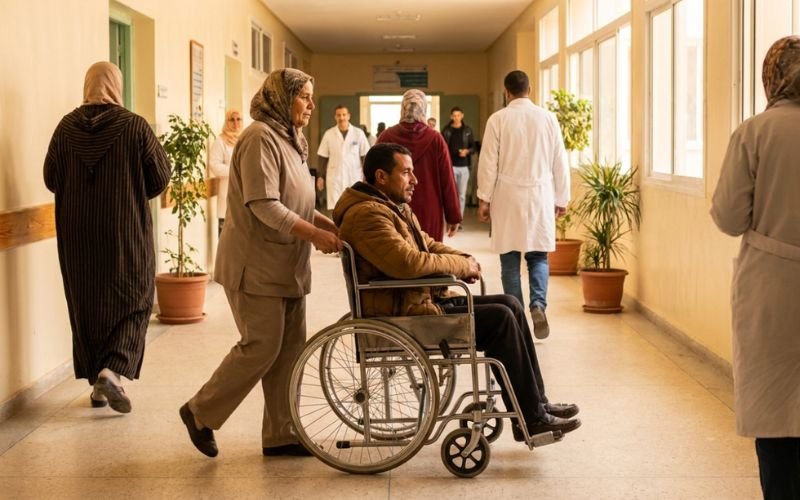
Our Range of Wheelchairs & Stretchers
Wheelchairs:
- Standard manual wheelchairs
- Lightweight folding wheelchairs for easy transport and storage
- Electric and power wheelchairs for patients with limited upper body strength
- Pediatric wheelchairs
Stretchers:
- Folding ambulance stretchers
- Aluminum alloy stretchers for lightweight, corrosion-resistant transport
- Scoop stretchers for emergency and trauma response
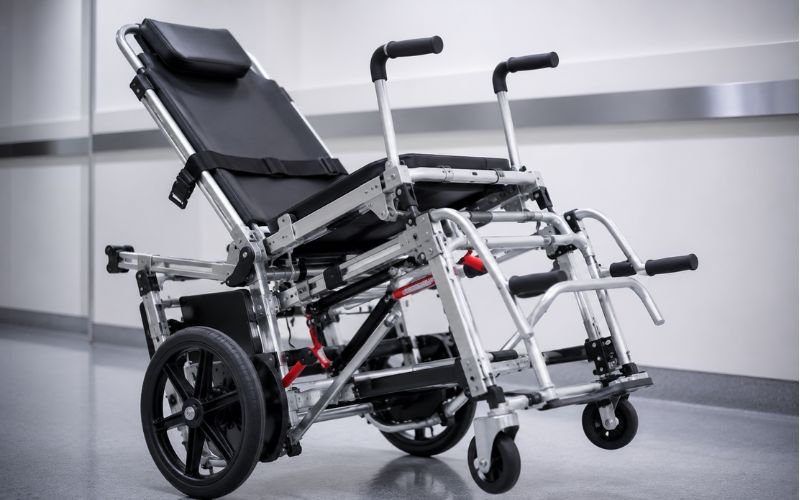
- Wheelchair cum stretchers (stair chairs) built for narrow stairwells, hallways and buildings without working elevators
Frames are available in aluminum alloy, lighter and more corrosion-resistant, or steel, heavier but more affordable, depending on your budget and how frequently the equipment moves between departments or vehicles.
Why a Stair Chair Is Not Just a Smaller Stretcher
A wheelchair cum stretcher looks like a compact wheelchair but is engineered specifically for controlled descent on stairs, with rear wheels, non-slip front guide wheels, and multiple lifting handles positioned for two staff members to move a patient safely through spaces a standard stretcher or wheelchair cannot navigate. This matters more in practice than it sounds on paper, many health facilities across the regions we serve are in older buildings or multi-level structures without a working elevator, and a proper stair chair is the difference between a safe, controlled patient transfer and an improvised, risky one.
Why Hospitals and Distributors Choose Clinivance
We ask about your building layout and patient population before recommending equipment, because a standard wheelchair and a stair-access chair solve different real-world problems, and a facility that only stocks one of them has a genuine gap the day it matters. That conversation happens at the quote stage, not discovered later during an actual emergency transfer.
The World Health Organization estimates that over 1 billion people globally live with some form of disability, and reliable access to appropriate mobility equipment is a direct, practical part of dignified, independent daily life for a meaningful share of the patient populations our buyers serve.
Buyers also work with us for:
- Guidance on matching wheelchair and stretcher type to your building and patient population
- Order volumes suited to hospitals, clinics, distributors and government tenders
- Export documentation prepared ahead of shipment arrival
- Fast WhatsApp and email response for urgent or repeat stock needs
Wheelchair and Stretcher Supply in South Africa, Egypt, Nigeria and the GCC
South Africa and Egypt are the two largest wheelchair import markets in Africa by value, driven by established hospital and rehabilitation infrastructure and growing private healthcare investment. Nigeria’s large hospital and NGO-supported disability programs make it the third major African import market, with steady demand for both standard and folding wheelchairs. Across the GCC, private hospitals and home healthcare providers increasingly specify electric wheelchairs and lightweight aluminum stretchers, often with faster delivery expectations than other markets.
We also see steady interest from Kenya, which has itself become a regional manufacturing and export hub for wheelchairs within East Africa, along with Uganda, Ghana and Ethiopia, and growing enquiries from distributors in parts of Asia sourcing mobility equipment outside their usual regional suppliers.
Export Markets We Serve
Clinivance exports wheelchairs and stretchers to hospitals, clinics and distributors across Africa and the Middle East, including South Africa, Egypt, Nigeria, the GCC region, Kenya, Uganda, Ghana and Ethiopia. Our full Hospital Furniture range, including ICU and OT furniture, examination tables and trolleys, is also available for buyers looking to consolidate orders.
Bulk order enquiry - Wheelchairs & Stretchers
Share your requirements and receive a quote
Frequently Asked Questions
What is a wheelchair cum stretcher and when do we need one?
Should we choose aluminum or steel frames for our wheelchairs and stretchers?
When should we choose an electric wheelchair over a manual one?
Do you supply pediatric wheelchairs?
What is the difference between a folding ambulance stretcher and a scoop stretcher?
What documentation is provided with wheelchair and stretcher exports?
Which countries do you currently supply wheelchairs and stretchers to?
Can we order wheelchairs and stretchers alongside other Hospital Furniture in one shipment?
Prefer to reach us directly?
enquiries@clinivanceglobal.com
Send us your product requirements
Within 24 hours
Monday – Saturday, 9AM – 6PM IST